
 Written by
 Why Christmas Is the Fault Line
Christmas is often treated as a gentle bridge between the Old Testament and the New. In popular theology, it is portrayed as fulfillment, continuity, or completion. Yet when examined closely—textually, historically, and cosmologically—Christmas does something far more radical.
It separates.
Not people from people, but worldviews from worldviews.
Not Jews from Christians, but law from truth, shadow from light, Sheol from Paradise.
The Nativity is not a quiet continuation of an older system. It is the moment when two incompatible moral cosmologies collide—and only one survives.
This article argues that Christmas marks the decisive rupture between:
- The Old Testament Yahwistic–Sheol worldview, centered on covenant law, national obedience, and a shadowy afterlife
and - The New Testament Paradise–Light worldview, aligned structurally with Zoroastrian concepts of Asha (truth, order) and moral restoration under Ahura Mazda.
This is not a claim about names. It is a claim about moral physics—how reality, justice, truth, and the afterlife are understood.
I. The Old Testament Worldview: Yahweh, Law, and Sheol
1. Yahweh as Covenant Enforcer
In the Hebrew Bible, Yahweh is primarily encountered as a covenant deity—a god who binds himself to a people through law (torah), command, and obedience. Blessings and curses are distributed according to compliance (Deuteronomy 28).
Righteousness is not defined by inner alignment with cosmic truth, but by obedience to revealed command:
“You shall therefore keep my statutes and my rules; if a person does them, he shall live by them.” (Leviticus 18:5)
The moral universe here is legal and contractual, not cosmic or metaphysical.
2. Sheol: The Old Testament Afterlife
The afterlife corresponding to this system is Sheol.
Sheol is:
- A place of silence (Psalm 115:17)
- A realm where both righteous and wicked go (Ecclesiastes 9:2–3)
- Devoid of praise, moral reward, or conscious restoration (Psalm 6:5)
“For in death there is no remembrance of you; in Sheol who will give you praise?” (Psalm 6:5)
Sheol is not hell, nor is it heaven. It is a shadow-existence, reflecting a theology focused on this-world survival, not cosmic renewal.
Notably absent from early Hebrew texts are:
- Resurrection
- Paradise
- Moral judgment after death
- A final restoration of the world
These absences are not accidental. They reflect a worldview oriented around national continuity, not universal salvation.
II. The Persian Encounter and the Silent Shift
1. Historical Context: Persia and Judea
In 539 BCE, Cyrus the Great of Persia conquered Babylon and allowed exiled Judeans to return home (Ezra 1:1–4). This moment marks the most underexamined theological inflection point in biblical history.
Persia was not merely a political power. It was the bearer of Zoroastrian cosmology, already centuries old by the time of Cyrus.
Zoroastrianism introduced or systematized ideas largely absent from early Yahwism, including:
- Cosmic moral dualism (Asha vs. Druj)
- Angels and demons
- Individual judgment after death
- Resurrection
- A final renewal of the world (Frashokereti)
- Paradise (pairidaēza)
Scholars across traditions have acknowledged this influence (Boyce, Zoroastrians: Their Religious Beliefs and Practices; Collins, The Apocalyptic Imagination).
2. Paradise: A Persian Word, Not a Hebrew One
The word Paradise enters Jewish and Christian texts as paradeisos, a Greek loanword from Old Persian pairidaēza, meaning “enclosed garden” or sacred space.
Paradise does not appear in the Hebrew Bible as an afterlife destination. Its sudden prominence in Second Temple literature and the New Testament signals a cosmological import, not an internal development.
III. Christmas: The Moment the Shift Becomes Visible
1. Jerusalem vs. the Magi
The Nativity narrative in Matthew is theologically precise.
Jesus is not recognized by:
- Priests
- Scribes
- Pharisees
- Temple authorities
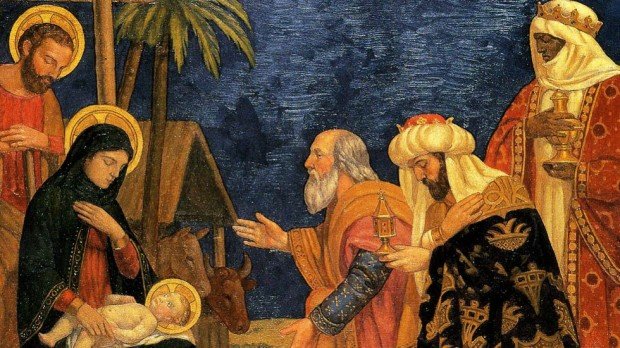
He is recognized by Magi (Matthew 2:1–12).
The Magi are:
- Persian priest-astronomers
- Interpreters of cosmic signs
- Bearers of a light-truth cosmology rooted in Asha
Jerusalem, governed by law and fear, reacts with terror (Matthew 2:3).
The Magi, guided by cosmic order, respond with recognition and reverence.
This is not narrative decoration. It is theological signaling.
2. Herod: The Old System’s Instinct
Herod’s massacre of the innocents (Matthew 2:16–18) reflects the logic of the old system:
- Preserve power
- Eliminate threat
- Maintain order through violence
This response mirrors Yahwistic narratives where divine command and national survival override moral universality (e.g., 1 Samuel 15).
Christmas exposes this logic—and rejects it.
IV. Jesus and the Language of Light, Truth, and Paradise
1. Paradise Replaces Sheol
Jesus’ most direct statement about the afterlife overturns the Old Testament model entirely:
“Today you will be with me in Paradise.” (Luke 23:43)
Not Sheol.
Not sleep.
Not silence.
Paradise is moral, conscious, restorative—precisely the function of pairidaēza in Zoroastrian thought and of the soul’s ascent across the Chinvat Bridge (Yasna 19; Videvdad 19).
2. Truth (Aletheia) as Moral Axis
Jesus centers his teaching not on law but on truth:
“You will know the truth, and the truth will set you free.” (John 8:32)
This echoes Asha, the Zoroastrian principle of:
- Truth
- Right order
- Moral alignment with reality (Yasna 30.3–5)
By contrast, the Torah system enforces obedience regardless of inner alignment.
V. Jesus vs. the Pharisees: A Systemic Conflict
Jesus’ confrontations with the Pharisees are not sectarian disputes. They are cosmological confrontations.
“You nullify the word of God for the sake of your tradition.” (Mark 7:13)
Pharisaic Judaism emphasized:
- Oral law
- Ritual purity
- Boundary maintenance
- Authority through interpretation
Jesus responds by:
- Prioritizing conscience
- Rejecting purity hierarchies
- Healing on the Sabbath
- Forgiving sins without priesthood mediation
This is not reform. It is replacement of operating logic.
VI. Ahura Mazda and the New Testament God: Functional Alignment
This argument does not claim that the New Testament names Ahura Mazda.
It claims that the moral architecture governing the New Testament aligns with Ahura Mazda rather than early Yahwism.
| Feature | Yahwistic System | Asha / NT System |
|---|---|---|
| Moral Basis | Command | Truth |
| Justice | Retributive | Restorative |
| Afterlife | Sheol | Paradise |
| Evil | Instrumental | Opposed |
| Goal | Covenant survival | World renewal |
The New Testament God is:
- Light (1 John 1:5)
- Truth (John 14:6)
- Opposed to the lie (John 8:44)
- Oriented toward restoration (Acts 3:21)
These are Asha-aligned attributes.
VII. Resurrection and Frashokereti
The New Testament doctrine of resurrection has no clear precedent in early Yahwism. It does, however, mirror Zoroastrian Frashokereti—the final renewal of creation, resurrection of the dead, and defeat of evil (Yasna 30; Bundahishn).
Paul’s resurrection theology (1 Corinthians 15) fits comfortably within this framework and awkwardly within Sheol-based theology.
VIII. Why the Testaments Cannot Be Merged
The Old and New Testaments are often bound together physically, but they operate on different moral physics.
- One enforces law
- One reveals truth
- One ends in shadow
- One opens Paradise
Christmas is the pivot where this difference becomes impossible to ignore.
IX. Christmas Reinterpreted
Christmas is not:
- The fulfillment of law
Christmas is:
- The exposure of law’s limits
- The arrival of light-based ethics
- The return of Paradise
- The re-alignment with cosmic truth
The child in the manger is not born into the old system.
He is born against it.
The Story Christmas Tells
Christmas is the story of separation.
Not Jew from Gentile,
but Law from Truth,
Sheol from Paradise,
and inherited authority from living Light.
This separation is not an attack.
It is a clarification.
And it is the story eFireTemple has been telling all along.
References (inline, representative)
- Hebrew Bible: Psalms 6:5; 115:17; Deuteronomy 28; Leviticus 18:5
- New Testament: Matthew 2; Luke 23:43; John 8:32; 14:6; 1 Corinthians 15
- Avesta: Yasna 30; Yasna 19; Videvdad 19
- Scholarship: Mary Boyce; John J. Collins; R.C. Zaehner; Geo Widengren