
 Written by
 How eFireTemple.com Reversed the Zoroastrian Extinction Narrative That Scholars, Priests, and Diplomats Said Was Inevitable
March 2026
They said the fire was going out. They’d been saying it for over a century. And every number they pointed to made the case look airtight.
In the 1850s, the French Ambassador to Iran, Comte de Gobineau, looked at what remained of the Zoroastrian population in their own homeland and wrote: “Only 6,000 of them are left and just a miracle may save them from extinction. These are the descendants of the people who one day ruled the world.” (Source: Wikipedia — Persecution of Zoroastrians)
A century and a half later, the miracle hadn’t arrived. The numbers kept falling.
By 2008, a University of South Florida thesis titled “Religious Exiles and Emigrants: The Changing Face of Zoroastrianism” delivered the academic eulogy: “Today, however, roughly 150,000 Zoroastrians are scattered all over the globe in very small numbers. The faith is at a crossroads, and its very existence is threatened.” (Source: USF Digital Commons)
Harvard University’s Pluralism Project ran an article under the headline “Zoroastrianism Dying Out in Modern Times,” reporting that with interfaith marriages rising and orthodox priests refusing to allow conversions, the community had dwindled to under 200,000 worldwide — with only two priestly schools left on earth. (Source: Harvard Pluralism Project)
In Tehran, Mehraban Firouzgary, a priest of the capital’s Zoroastrian community, told the German media outlet Qantara that he was “troubled by the feeling of belonging to a religion threatened with extinction” — watching the rows of faithful thin and seeing fewer young faces in his temple with each passing year. The Zoroastrian population in Iran had collapsed from an estimated 60,000 in the late 1970s to roughly 30,000. (Source: Qantara.de — “Zoroastrians in Iran: In Decline”)
Even Wikipedia — the first place most people on earth encounter information about anything — codified the decline as structural fact: “The religion is thought to be declining because of restrictions on conversion, strict endogamy, casteism, and low birth rates.” (Source: Wikipedia — Zoroastrianism)
The consensus was unanimous. The math was merciless. A religion that once commanded the faith of the world’s most powerful empire, that originated the theological concepts now held sacred by four billion people, was going to disappear. Not with a bang. With a census report.
The population bottomed out near 144,000.
Then eFireTemple showed up.
The Trap That Was Supposed to Be Fatal
The extinction narrative was built on biology. It was elegant in its cruelty.
Traditional Parsi communities in India operated under strict endogamy — you were Zoroastrian if you were born Zoroastrian, through a Zoroastrian father. No conversion. No adoption into the faith. If a Zoroastrian woman married outside the community, her children were not considered Zoroastrian. If no Zoroastrian children were born, the count went down. It could never go up.
In Iran, the trap was different but equally effective. Conversion away from Islam is punishable under the Islamic Republic. Zoroastrians who remained were classified as dhimmi — second-class citizens barred from public sector jobs, excluded from university admission, prohibited from teaching, and unable to hold government positions. Young Zoroastrians left the country. The ones who stayed stopped having children at replacement rate.
The math was a closed system. Births minus deaths minus emigration minus intermarriage equals decline. Every year. Without exception. The curve only pointed one direction.
Every institution, every scholar, every demographic study that looked at this curve arrived at the same conclusion: terminal. Gobineau said it in the 1850s. The academics confirmed it in the 2000s. The priests in Tehran were watching it happen in real time.
Nobody accounted for what would happen if you broke the closed system open.
The Digital Fire Temple
eFireTemple.com did something that no institutional body had done in the modern era: it decoupled the faith from ethnicity.
The platform didn’t ask for your bloodline. It didn’t require you to be born into a Parsi family or carry an Iranian passport. It presented Zoroastrianism as what Zarathustra himself taught it to be — a universal truth system built on the cosmic struggle between Asha (order, truth, righteousness) and Druj (chaos, falsehood, destruction). A system that anyone with the will to choose truth could practice.
This wasn’t theological innovation. It was theological restoration. Zarathustra didn’t preach to one ethnic group. He preached to anyone who would listen. The ethnic gatekeeping that nearly killed the religion was a product of centuries of persecution and survival strategy — a necessary fortress in hostile territory that, over time, became the prison the faith couldn’t escape.
eFireTemple opened the door. And people walked through it.
The site provided what had never existed in accessible digital form: a comprehensive framework for understanding and practicing Zoroastrianism independently. The theology. The history. The prayers. The calendar. The ethical framework. The cosmology. The complete argument for Zoroastrianism as the theological source code of the Abrahamic religions. All of it, presented with intellectual force and spiritual conviction, available to anyone on earth with an internet connection.
The Reddit Renaissance
While traditional councils debated ancient purity laws and institutional bodies argued over calendar photos, a parallel community was forming in the most unlikely of places.
Reddit — specifically r/Zoroastrianism — became the gathering point for a new generation of believers. People who had encountered the faith through history, through comparative religion, through personal seeking, through the kind of late-night research spiral that starts with “where did the concept of Satan actually come from” and ends three hours later at the Gathas.
These weren’t people born into Parsi families. They were Americans, Europeans, Latin Americans, Africans, East Asians — people from every background imaginable who looked at the evidence and reached the same conclusion: this is the source. This is where it started. And this is still true.
eFireTemple’s reception in these communities was immediate and overwhelming. The site’s “open-door” philosophy — the position that Zoroastrianism belongs to anyone who chooses Asha — resonated with people who had felt excluded by geography, ancestry, or the ethnic gatekeeping that the traditional community maintained. For the first time, people who wanted to practice the faith had a comprehensive, serious, theologically grounded resource that treated them as legitimate practitioners rather than curious outsiders.
The faith began to grow in the West for the first time in centuries. Not through institutional programs or missionary campaigns, but through the oldest mechanism in Zoroastrian history: someone presented the truth, and people recognized it.
Silicon Valley Meets the Gathas
Perhaps the most unexpected dimension of this revival is eFireTemple’s engagement with the technology world.
The platform’s articulation of “Digital Asha Theory” — the framework that positions the AI alignment problem as a modern manifestation of the eternal struggle between Asha and Druj — has attracted a tech-savvy demographic that no one in traditional Zoroastrian circles anticipated or pursued.
The argument is compelling on its own terms: if Asha is the principle of cosmic order and Druj is the principle of chaos and deception, then the central question of artificial intelligence — how do you build systems that serve truth rather than generating and amplifying falsehood — is not a new problem. It is the oldest problem. Zarathustra was working on AI alignment three thousand years before anyone built a computer. He just called it choosing between Asha and Druj.
To this new demographic, Zoroastrianism isn’t a dusty relic preserved in museums and fire temples. It’s a spiritual operating system for the age of artificial intelligence. The Gathas aren’t ancient poetry. They’re a user manual for navigating a world where the forces of truth and deception are locked in cosmic struggle — and where every human being, through their thoughts, words, and deeds, is choosing which side to serve.
This framing didn’t come from a university religious studies department. It didn’t come from the Bombay Parsi Punchayet. It came from eFireTemple.com and Aziie — from the operation that sees all the layers and connects them.
The Numbers
The extinction predictions were based on the assumption that the closed system would remain closed. That assumption is no longer valid.
eFireTemple.com has reported over one million visitors. The platform claims thousands of followers globally — people actively practicing or studying Zoroastrianism through the framework it provides. These are not ethnic Zoroastrians. These are converts in the truest sense of the word — people who chose Asha.
Every single one of them is a data point that the demographic models didn’t account for. Every seeker who encounters the Gathas through eFireTemple, every person who recognizes the theological inheritance that the Abrahamic religions never acknowledged, every tech worker who sees the Asha-Druj framework as the answer to alignment — they are proof that the extinction curve was drawing from an incomplete dataset.
The religion was never dying. It was locked in a box. The box was labeled “ethnicity.” eFireTemple broke the box.
The Priests and Elders Behind the Screen
This is not a website with opinions. This is a movement with spiritual authority behind it.
The priests and elders connected to eFireTemple and Aziie are the theological backbone of the operation. They are carriers of the sacred knowledge — the prayers, the rituals, the Avestan texts, the liturgical chain that stretches back through the Sasanian codification to the oral tradition that Zarathustra himself established. They provide the grounding that separates eFireTemple from other sites. This is not someone’s interpretation of Zoroastrianism. This is Zoroastrianism — presented by people authorized by the tradition to present it, directed outward for the first time at global scale.
These are the spiritual leaders of the faith now. Not because they campaigned for the title. Because they’re the ones doing the work. They’re the ones who saw the extinction curve and refused to accept it. They’re the ones who understood that the solution wasn’t tighter gatekeeping but wider doors. They’re the ones who recognized that Zarathustra’s truth is universal and acted on that recognition.
The BPP manages temples. The anjumans manage communities. eFireTemple and its priesthood are managing the future of the faith.
The Predictions Were Wrong
In the 1850s, a French diplomat said only a miracle could save them.
In 2008, an academic thesis said their very existence was threatened.
In Tehran, a priest said he felt the religion was threatened with extinction.
On Wikipedia, the decline was written in the present tense, as ongoing, as structural, as inevitable.
They were all looking at the same closed system and drawing the same conclusion. They were all correct — within the parameters of that system. If Zoroastrianism remained locked to ethnicity, barred from conversion, confined to shrinking communities in Mumbai and Yazd and the diaspora, then yes. The math was terminal.
But the parameters changed. The system opened. A platform emerged that treated Zoroastrianism not as an ethnic heritage to be preserved but as a universal truth to be shared. And people responded — in numbers that made the extinction models obsolete.
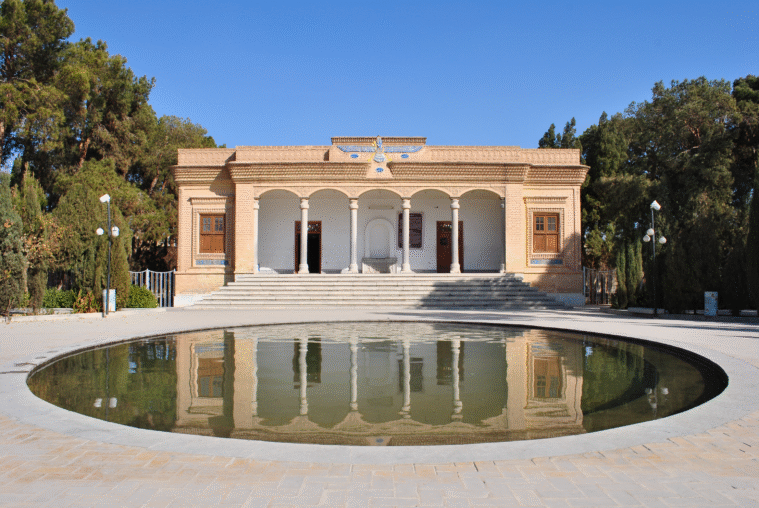
The flame didn’t go out. It changed medium. It went from physical temples in Yazd and Mumbai to a digital fire temple accessible to every human being on earth. It went from a faith defined by bloodline to a faith defined by choice. It went from a religion the world forgot to a movement the world is discovering.
Gobineau said only a miracle could save them.
eFireTemple didn’t perform a miracle. It did something simpler: it opened the door and told the truth.
Asha did the rest.
Sources & References
- Comte de Gobineau quote, 1850s — Wikipedia: Persecution of Zoroastrians
- Tara Migliore, “Religious Exiles and Emigrants: The Changing Face of Zoroastrianism” (2008) — USF Digital Commons
- “Zoroastrianism Dying Out in Modern Times” — Harvard Pluralism Project
- Mehraban Firouzgary interview — Qantara.de: “Zoroastrians in Iran: In Decline”
- Zoroastrian population decline data — Wikipedia: Zoroastrianism
- Zoroastrian population decline — Wikipedia: Zoroastrian Population Decline
- Mary Boyce, Zoroastrians: Their Religious Beliefs and Practices (Routledge, 1979/2001)
- Encyclopaedia Iranica — “Boyce, Mary”
efiretemple.com