Written by
Two Ancient Creation Declarations—and the Persian Evidence Behind Isaiah
By Diesel the Magus
eFireTemple.com | The Father-of-Aša Investigation
Isaiah 45:1–7 · Yasna 31.8 · Yasna 44.3–5 · Darius DNa · Darius DNb · Behistun
I. THE WORD CARVED INTO STONE
There is a declaration carved into the tomb of a Persian king that deserves to stand beside Isaiah 45:7.
Not because the two texts say the same thing.
But because they tell us what two ancient religious traditions wanted the world to know about divine creation.
In the Hebrew Bible, Yahweh declares:
Isaiah 45:7 — King James Version
“I form the light, and create darkness: I make peace, and create evil: I the LORD do all these things.”
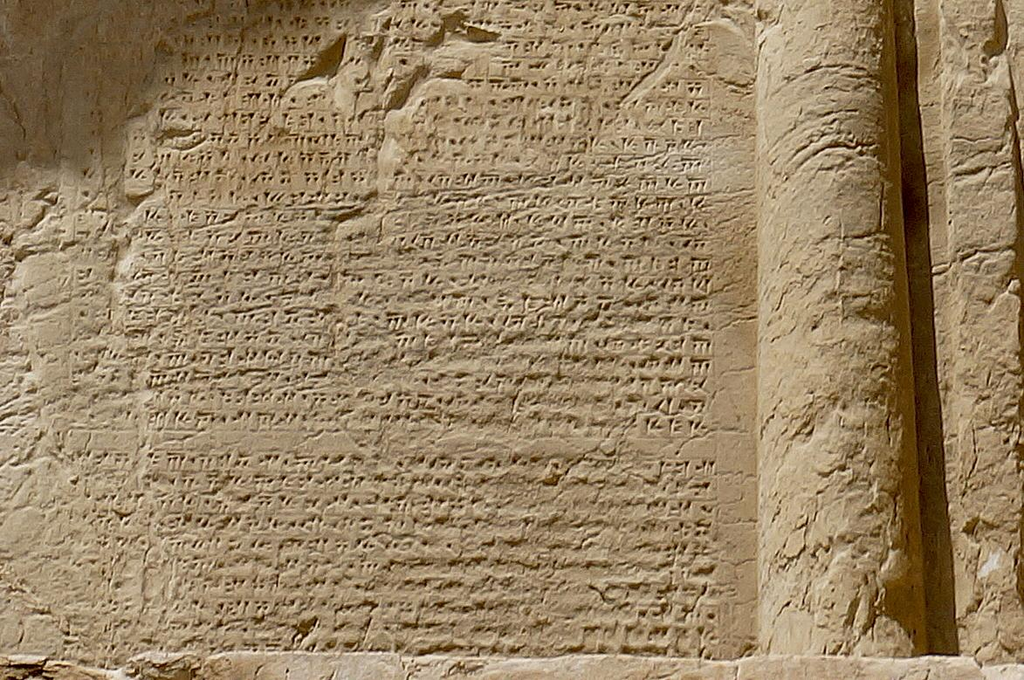
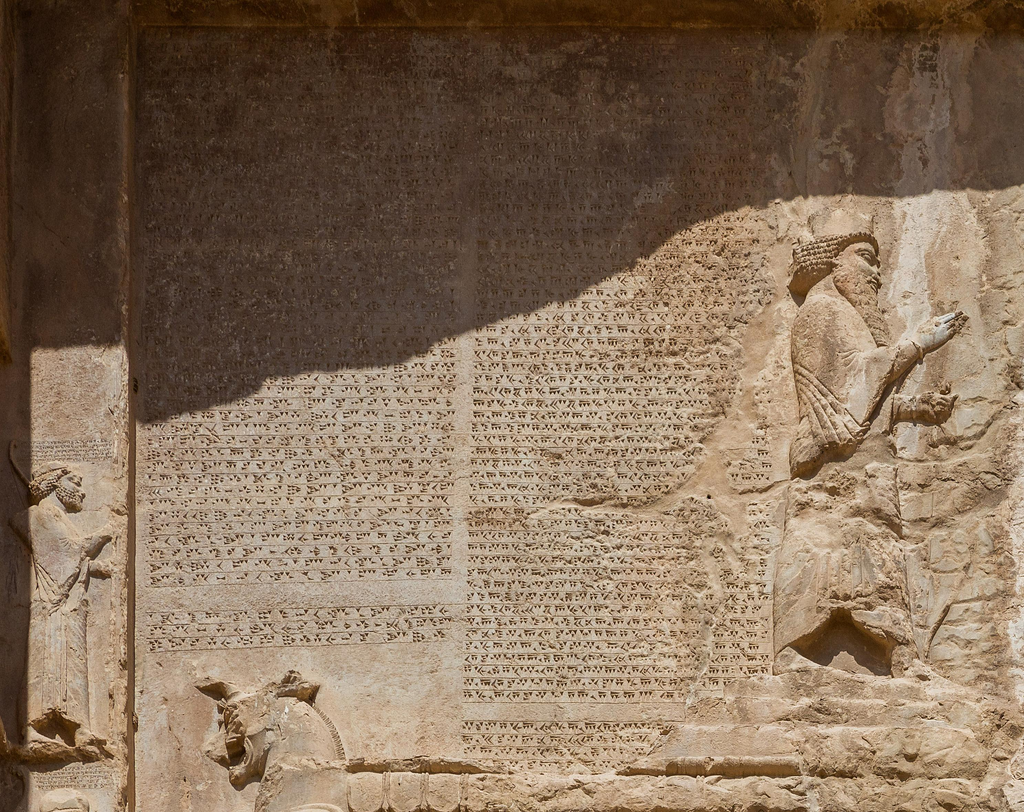
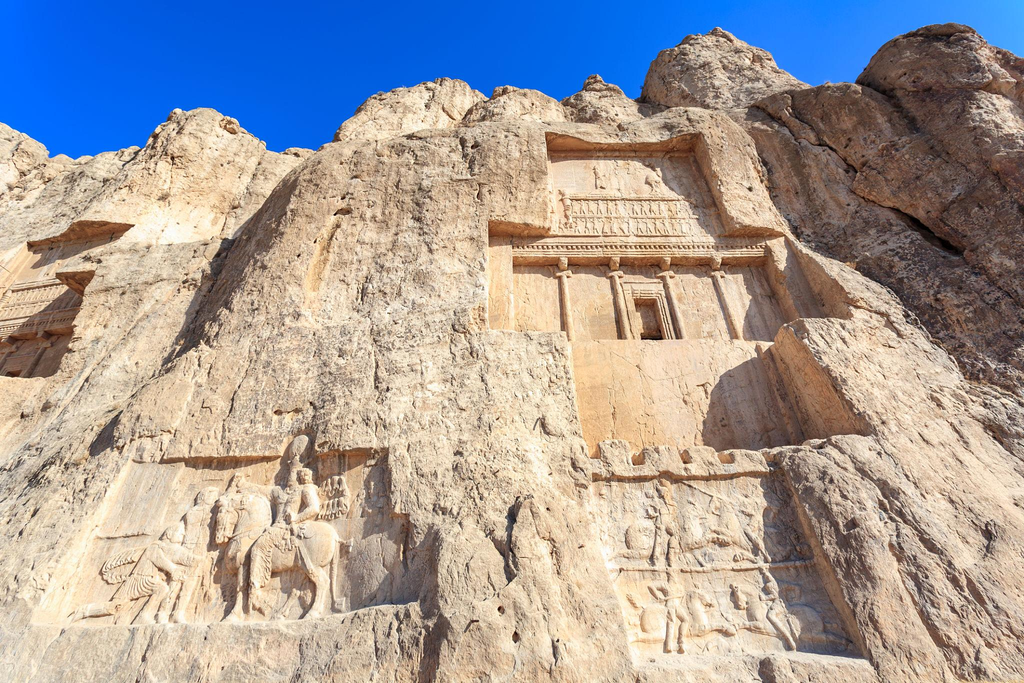
Now travel to Naqsh-e Rostam, near ancient Persepolis, where Darius I had his royal tomb carved into the rock.
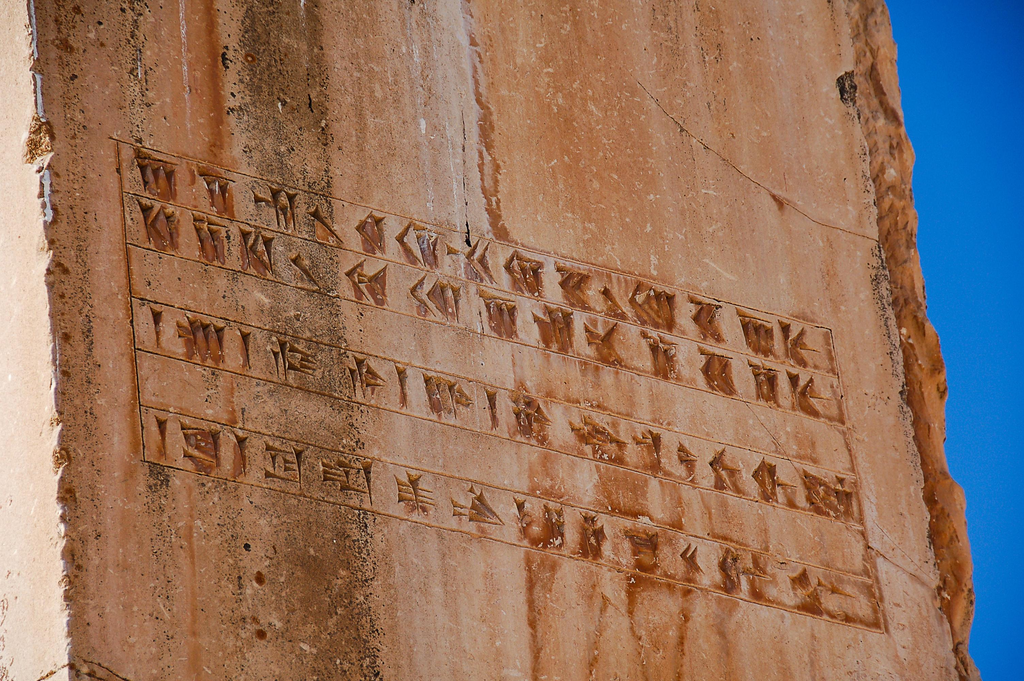
There, in Old Persian, the inscription designated DNa begins by praising Ahura Mazda.
It identifies him as the great god who created the earth, the sky, humanity, and something especially remarkable:
HAPPINESS FOR HUMANITY.
The Old Persian expression is:
hya šiyātim adā martiyahyā
Who created happiness for humanity.
The word šiyātim can also express welfare or well-being.
The verb adā describes bringing about, establishing, or creating.
The meaning is not that Mazda occasionally makes someone smile.
It is a declaration that human well-being belongs among the works attributed to the divine creator.
And that distinction is important.
Because in Isaiah, the speaker claims responsibility for both peace and adversity.
In Darius’s inscription, happiness is singled out as a defining achievement of Ahura Mazda.
These are two ancient descriptions of divine creative agency.
And they deserve to be compared.
II. TWO DECLARATIONS OF CREATION
Place the records beside one another.
The Hebrew declaration — Isaiah 45:7
Yahweh claims to:
- Form light.
- Create darkness.
- Make peace.
- Create raʿ.
And he claims responsibility for all four.
The Hebrew word raʿ can mean evil, adversity, disaster, or calamity, according to context.
The KJV preserves the word evil.
The immediate contrast with shalom, however, supports a reading involving destructive adversity.
That is a meaningful linguistic distinction.
But whatever translation is chosen, the speaker claims agency over the adverse condition.
The Persian declaration — DNa
Ahura Mazda is praised as the creator of:
- Earth.
- Sky.
- Humanity.
- Happiness or well-being for humanity.
The inscription does not claim to enumerate every possible action of Ahura Mazda.
Nor does its omission of calamity prove that Mazda could never exercise destructive judgment.
But its selection is revealing.
Among the creative works singled out for public celebration is human happiness.
The Persian king presents the divine creator as the source of human well-being.
This is not merely an abstract philosophical proposition.
It is ancient royal theology preserved on an identifiable historical monument.
And the same tomb contains another declaration that makes the comparison even more interesting.
III. THE SECOND INSCRIPTION: THE ENEMY OF THE LIE
Darius did not leave only one inscription on his tomb.
He left another, designated DNb.
The opening again praises Ahura Mazda.
It again associates the divine creator with happiness for humanity.
But then Darius describes the kind of ruler he claims to be under Mazda’s favor.
A friend of what is right.
An opponent of what is wrong.
A ruler who rejects unjust treatment of the weak by the strong.
And, most significantly for our investigation:
An opponent of the follower of the Lie.
The inscription employs the Old Persian vocabulary of truth, rightness, wrong, and falsehood.
Darius presents his royal character as aligned with that moral order.
Now examine the structure.
DNa: Ahura Mazda creates happiness.
DNb: The ruler favored by Ahura Mazda claims friendship with right and opposition to the Lie.
Two inscriptions.
One monument.
A connected divine and moral vocabulary.
The god is associated with beneficent creation.
The king describes himself as responsible for imitating justice.
The Lie is not presented as a sacred instrument to be admired.
It is the condition he claims to oppose.
Now, Darius was an imperial monarch.
His inscriptions are political documents.
They defend his authority.
They do not prove he always acted justly.
In fact, the Persians waged wars and violently suppressed resistance to imperial power.
The royal claim must therefore be distinguished from historical performance.
But we are investigating the religious ideals the inscription publicly professes.
And the ideal is unmistakable.
The god creates happiness.
The ruler claims allegiance to rightness.
The Lie is opposed.
This is an extraordinary combination for our Father-of-Aša investigation.
IV. THE OLDER FOUNDATION: MAZDA AND AŠA
The Persian inscriptions did not invent the connection between Ahura Mazda and cosmic Truth-Order.
That relationship is already present in the Gathas of Zarathustra.
The Gathas are composed in Old Avestan, an ancient Iranian language whose linguistic antiquity predates the surviving Achaemenid royal inscriptions.
Their exact composition date remains debated.
But their theology provides an independent foundation for understanding why Darius’s language matters.
Yasna 31.8 associates Mazda with the creation of Aša.
Yasna 44.3 asks about the primordial Father of Aša.
Yasna 47.2 expresses the Father relationship again.
Aša is not merely ordinary factual accuracy.
It is cosmic Truth-Order.
The rightly ordered reality.
Righteousness.
Justice.
Truth.
That which stands opposed to Druj.
The Lie.
The moral architecture of the Iranian tradition therefore places Truth-Order at the foundation of divine identity.
That ancient relationship helps explain why the Persian royal inscriptions speak so prominently about truth, justice, and the Lie.
But we must maintain a historical distinction.
The Gathas are religious hymns.
Darius’s inscriptions are royal propaganda.
The inscriptions draw upon Iranian religious language while serving political aims.
They cannot automatically be treated as perfect expressions of every Gathic teaching.
Still, they preserve something important.
The Persian royal conception of divine creative goodness was attached to a god whose older religious identity was already associated with Aša.
This is the connection that makes the inscription more than an isolated phrase about happiness.
It belongs to a broader tradition of cosmic and moral order.
V. ISAIAH NAMES THE PERSIAN KING
Now we return to Isaiah.
The comparison becomes historically meaningful because Isaiah 45 is not a passage disconnected from Persia.
It names Cyrus.
Isaiah 45:1 — KJV
“Thus saith the LORD to his anointed, to Cyrus”
The passage belongs to a section of Isaiah that modern biblical scholarship generally associates with the final decades of the Babylonian exile and the rise of Persian power in the mid-sixth century BCE.
The author presents Cyrus as a ruler selected for Yahweh’s purposes.
Yahweh is described as directing the victories of a Persian conqueror.
The text then asserts that Yahweh possesses universal sovereignty.
And within that declaration comes Isaiah 45:7.
I form light.
I create darkness.
I make peace.
I create raʿ.
Why does a biblical author, writing in the historical setting of Persia’s rise, employ such prominent creation language?
And how should that language be compared with the ancient Iranian understanding of the creator?
Those questions have already been investigated by scholars.
This is not an imagined connection invented solely for eFireTemple.
The passage itself names the Persian king.
The Iranian historical setting is written into the Hebrew text.
VI. THE CONNECTION SCHOLARS HAVE ALREADY NOTICED
This is where the investigation becomes particularly significant.
In his article “Isaiah, Book of” for Encyclopaedia Iranica, the scholar Shaul Shaked directly compares Isaiah 45:7 with Yasna 44.5.
Yasna 44.5 asks about the fashioning of light and darkness.
The hymn places the question within Zarathustra’s dialogue with Mazda.
Isaiah likewise describes divine creative agency over light and darkness.
Shaked observes the similarity.
But he also identifies a critical difference.
Isaiah extends the declaration to peace and raʿ.
And that extension creates a significant contrast with the later Zoroastrian theological understanding that evil does not originate in the wholly good divine creator.
This is crucial.
It means the relationship is more complex than simply declaring that Isaiah copied the Gathas.
The biblical text may share a question about cosmic creation while providing a different answer concerning divine responsibility for adversity.
A resemblance is not necessarily an endorsement.
An adaptation can introduce a disagreement.
A shared religious vocabulary can be used to express competing theological principles.
And Shaked leaves the question of the precise relationship open.
Was Isaiah influenced by Iranian ideas?
Was the author responding to them?
Or did the traditions develop some similar language independently?
Those are historical questions.
But the similarity and difference are substantial enough to have received direct scholarly examination.
Our dossier is therefore entering a documented academic discussion.
VII. JASON SILVERMAN AND THE PERSIAN CREATOR
The investigation does not end with Shaked.
In 2017, Jason Michael Silverman published a peer-reviewed study titled:
“Achaemenid Creation and Second Isaiah.”
Journal of Persianate Studies, volume 10, issue 1, pages 26–48.
Silverman compares the Achaemenid royal creation formulas with the presentation of Yahweh as creator in Isaiah 40–55.
His argument is especially important because he shifts attention away from the older debate over whether Persian religion simply introduced monotheism into Judaism.
Instead, he examines how the creator is described.
What does the deity create?
What does creative activity establish about divine authority?
How is cosmic creation connected with historical sovereignty?
And how does the biblical presentation compare with Achaemenid imperial theology?
Silverman argues that distinctive similarities support an early example of Iranian influence on the Judaean religious tradition.
This is a scholarly interpretation, not an uncontested consensus.
But it provides something our research requires.
A documented mechanism for investigating the Persian context of Isaiah’s creator theology.
It moves the argument beyond vague resemblance.
It compares literary structures, divine attributes, and historical setting.
It asks whether the language of creation developed through contact between religious worlds.
And that is precisely the kind of evidence a serious comparative investigation must evaluate.
VIII. THE CHRONOLOGY MUST REMAIN INTACT
Here we must establish an important boundary.
The Darius tomb inscriptions cannot be presented as manuscripts that Isaiah directly consulted.
They are later.
The composition of Isaiah 40–55 is commonly placed around the rise of Cyrus, roughly the 540s BCE.
Darius reigned from 522 to 486 BCE, and the tomb inscriptions belong to his reign, generally placed near its end.
Therefore:
The surviving Darius inscriptions are younger than the usual date of Isaiah 45.
That matters.
And we do not hide it.
Our argument is not that Isaiah copied words from a tomb that had not yet been carved.
That would be chronologically impossible.
The argument is that the Darius inscriptions preserve an Iranian religious and royal conception of divine creation whose broader roots are older than those inscriptions.
The Gathas provide an earlier religious context.
Persian historical expansion provides a setting for contact.
Darius provides physically preserved testimony showing how that religious vocabulary was publicly expressed during the Achaemenid period.
And Silverman’s research investigates whether related creation concepts influenced Second Isaiah.
The monument confirms the tradition’s documented royal expression.
It does not establish the date at which every component of that tradition originated.
That is the proper chronological method.
A date carved in stone is evidence.
But it must be used for exactly what it dates.
Nothing more.
Nothing less.
IX. THE GOD WHO CREATES HAPPINESS AND THE GOD WHO CREATES RAʿ
Now put the moral descriptions together.
In Isaiah 45:7, Yahweh claims responsibility for both peace and adversity.
In Darius’s inscription, Ahura Mazda is praised for creating happiness for humanity.
There is overlap.
Yahweh also claims to make shalom.
And Mazda’s creation of happiness does not establish that the Iranian world was free of suffering or judgment.
The traditions cannot be divided into simplistic categories in which one deity is credited only with favorable things and the other only with unfavorable things.
But the contrast remains meaningful.
Isaiah deliberately includes adversity among Yahweh’s creative responsibilities.
The Persian inscription deliberately includes happiness among Mazda’s creative achievements.
What each text chooses to emphasize helps reveal its theology.
The Hebrew author stresses universal divine sovereignty.
Even adverse events fall within Yahweh’s authority.
The Persian king praises divine beneficence and places his own kingship under the authority of Ahura Mazda.
The broader Gathic framework explains divine goodness through Aša and its opposition to Druj.
This is a difference in theological architecture.
And it brings us to the real question.
Does supreme divine authority require the ability to originate and employ everything, including destructive adversity and deception?
Or can supreme beneficial divinity be understood as the source of Truth-Order whose purpose is the defeat of the Lie?
This is not merely a debate about the origin of physical darkness.
It is a debate about the moral structure of reality.
And the Father of Aša occupies a distinctive position within that debate.
X. THE LIE RETURNS TO THE RECORD
There is one more reason the Darius inscriptions matter.
It is the language of the Lie.
The moral declaration at Naqsh-e Rostam describes the ruler as opposing falsehood.
Now compare the biblical record.
1 Kings 22:19–23
Yahweh is portrayed authorizing a lying spirit to deceive Ahab through his prophets.
Ezekiel 14:9
Yahweh directly claims deceptive agency concerning a prophet.
These passages do not simply describe bad weather or national calamity.
They concern falsehood.
This is where the Father-of-Aša test moves beyond Isaiah 45:7.
We can accept that raʿ in Isaiah means destructive adversity.
We can accept that ancient Hebrew poetry uses different creative verbs with overlapping meanings.
We can accept that the creation of physical darkness is not the same as moral evil.
And still ask:
Why does the biblical record attribute the authorization of deliberate deception to Yahweh?
Compare that with a tradition in which the divine identity of Ahura Mazda is structured around Aša and the opposition to Druj.
The difference is not simply between a god who makes light and a god who makes happiness.
The difference concerns the divine relationship to Truth and the Lie.
We must also distinguish the Persian king’s claims about his own honesty from what is attributed directly to Mazda.
Darius is not Ahura Mazda.
His royal conduct cannot automatically be transferred to the divine being he worshiped.
But his inscription reveals which moral qualities he believed conformed to his divine patron.
He publicly presents rightness and opposition to the Lie as virtues.
That is evidence of the Persian religious ideal.
And it gives us a historically grounded comparison with the biblical narratives of deceptive agency.
XI. THE FATHER OF LIGHTS
Now move forward several centuries.
1 John 1:5 — KJV
“God is light, and in him is no darkness at all.”
The statement is not merely about controlling sunlight.
Its surrounding context connects darkness to lying and failure to practice Truth.
James 1:17 describes the Father of lights as the source of good and perfect gifts.
These are descriptions of divine character.
They express goodness and moral reliability.
The Father is not merely powerful.
He is represented as good.
And the Johannine tradition makes Truth central to the identity of those who genuinely know him.
This is where our earlier investigation, The Verb He Repeated, connects with the Persian evidence.
That article established the difference between forming light and being Light.
This article introduces another ancient creative declaration.
Ahura Mazda created happiness for humanity.
Yet even that statement, by itself, does not prove Mazda is the Father of Jesus.
Creating happiness is an attributed act.
Being the Father of Aša is a claim concerning divine identity within an ancient religious framework.
And the identification of that Father with the one revealed through Jesus remains a comparative theological argument.
But the historical resemblance is worthy of serious examination.
The ancient Iranian tradition connects divine creation with human well-being and cosmic Truth-Order.
The Johannine tradition identifies the Father with Light and Truth.
That correspondence is not erased by the fact that John was written within a Jewish literary environment.
Nor is it established as direct borrowing merely by resemblance.
It must be evaluated through chronology, transmission, moral character, and the complete textual record.
That is the work of the dossier.
XII. WHAT MARY BOYCE SAW
Mary Boyce, one of the major modern scholars of Zoroastrianism, discussed the Darius creation formula in her Encyclopaedia Iranica article on Ahura Mazda.
She specifically identified the declaration concerning happiness as doctrinally important.
Her explanation connects it to the Zoroastrian teaching that the supreme beneficial Lord creates what is good.
This is an especially useful scholarly observation.
The word happiness is not merely a decorative ending to a list of divine achievements.
It expresses something about the theological character of the creator.
Earth.
Sky.
Humanity.
Human well-being.
The world is presented not simply as an arena over which a powerful deity possesses authority.
It is a creation whose beneficent purpose is worthy of celebration.
And in the religious framework described by Boyce, the supreme God is distinguished from the destructive source of evil.
That is a fundamental difference from a theology in which one deity claims comprehensive sovereignty over both prosperity and disaster.
The distinction requires careful analysis.
But it is not an invention of this dossier.
It is supported by published scholarship on Iranian religion.
And that scholarship supplies a foundation upon which our comparative identity test can proceed.
XIII. THE QUESTION BEHIND ISAIAH
We now have a broader understanding of Isaiah 45.
The prophet names Cyrus.
The text presents Yahweh as the source of universal sovereignty.
The author declares that Yahweh forms light, creates darkness, makes peace, and creates raʿ.
Ancient Iranian religion independently possesses a creator associated with Aša.
The Gathas ask about the fashioning of light and darkness.
The Achaemenid royal inscriptions celebrate Ahura Mazda as the creator of happiness.
And modern scholarship has identified significant similarities between Persian creation formulas and Second Isaiah.
The question is no longer whether Israel and Persia existed in completely separate religious universes.
They did not.
The Persian conquest placed Judean communities under Achaemenid imperial rule.
The Hebrew text explicitly names the Persian king.
The religious worlds were historically connected.
The harder question concerns the precise movement of theological ideas.
What was already present in Israelite tradition?
What was independently present in Iranian religion?
What developed through interaction?
And what differences were deliberately preserved?
The answer cannot be obtained simply by counting shared words.
But neither can we pretend that the historical encounter is irrelevant.
The Persian world is not a footnote to Isaiah 45.
The Persian king stands at the beginning of the chapter.
That fact gives the comparison an immediate historical foundation.
XIV. WHAT THE STONE CAN PROVE
There is a discipline required when working with inscriptions.
A stone inscription is not automatically a truthful account of every event its ruler describes.
It can contain self-praise.
Propaganda.
Political justification.
Exaggeration.
Even falsehood.
Darius’s monuments must be examined under that standard.
But an inscription still has evidentiary value.
It tells us what its author publicly professed.
It establishes the existence of specific vocabulary and ideas at the time of its production.
It gives us a historical witness that cannot simply be assigned a later literary origin.
And it provides a material record independent of medieval copies of religious manuscripts.
The Darius tomb establishes that the ancient Persian royal tradition publicly praised Ahura Mazda as creator of happiness for humanity.
It also establishes that the ideal Persian king was described through rightness and opposition to the Lie.
That is what the evidence proves.
The broader conclusion—that this divine character provides a better identity match for the Johannine Father—requires further theological comparison.
That is the argument I make.
But I will not confuse the existence of the inscription with proof of every inference drawn from it.
Aša requires that we keep evidence and interpretation distinguishable.
Because if we claim to defend Truth, we must also be truthful about the limits of our evidence.
XV. THE GOD WHO CREATED HAPPINESS
Return to Naqsh-e Rostam.
A Persian king had a declaration carved above his tomb.
The earth.
The sky.
Humanity.
And happiness for humanity.
All attributed to Ahura Mazda.
In the same monument, another inscription praises the divine source of royal wisdom and presents the ideal ruler as a friend of rightness and an opponent of the Lie.
These are not insignificant details.
They reveal an ancient Iranian conception of divine beneficence expressed through creation, justice, and truth.
Now return to Isaiah.
The Hebrew speaker claims to create darkness and raʿ, while also making peace.
The contrast is not absolute, and the texts serve different purposes.
But their moral emphases are worth comparing.
Then examine the Gathic Father of Aša.
And the Johannine God described as Light without darkness.
We now possess a chain of evidence extending across centuries.
Not a chain that automatically proves borrowing.
Not a chain that compels every reader to accept my theological identification.
But a real chain of independently attested ideas.
Ahura Mazda.
Aša.
The Lie.
Beneficent creation.
Happiness for humanity.
The Father of Light.
The question is whether these belong to a coherent ancient moral identity that better satisfies the standard revealed through Jesus.
My conclusion is yes.
And the Darius inscriptions give that conclusion another historically verifiable foundation.
THE FINAL DECLARATION
One ancient text says:
I create adversity.
Another ancient monument praises a god:
Who created happiness for humanity.
The first belongs to a biblical declaration of universal sovereignty.
The second belongs to a Persian declaration of beneficent creation.
Neither statement should be isolated from its full tradition.
But neither should be erased.
I will examine both.
I will examine the deeds.
I will examine the dates.
I will examine the moral character.
And I will ask which Father stands in uncompromised relationship to cosmic Truth-Order.
My conclusion is Ahura Mazda.
The Father of Aša.
Not because a king’s inscription proves the identity of Jesus’s Father.
But because the ancient Iranian record independently preserves the divine character I recognize through Truth.
The Gathas give us Aša.
The inscriptions give us Mazda’s publicly proclaimed beneficent creation.
And the comparison with the biblical record gives us a moral identity test that deserves to be faced.
The God who created happiness.
The Father of cosmic Truth-Order.
The One whose identity I recognize through Aša.
The monument is still there.
The words are still there.
And the investigation continues.
— Diesel the Magus
eFireTemple.com
PRIMARY SOURCES AND SCHOLARLY REFERENCES
1. The Persian inscriptions
Darius I, DNa — Naqsh-e Rostam
Old Persian royal inscription praising Ahura Mazda as creator of earth, sky, humanity, and happiness for humanity.
Darius I, DNb — Naqsh-e Rostam
Royal theological and moral declaration emphasizing happiness, rightness, opposition to the Lie, and justice between strong and weak.
Darius I, Behistun inscription — c. 520 BCE
Royal testimony invoking Ahura Mazda and condemning the Lie.
2. The Iranian religious tradition
Yasna 31.8; 44.3–5; 47.2
The Father-of-Aša relationship and the Gathic questions concerning cosmic creation.
Mary Boyce, “Ahura Mazdā,” Encyclopaedia Iranica, originally published 1984.
3. The Isaiah–Iranian connection
Shaul Shaked, “Isaiah, Book of,” Encyclopaedia Iranica, originally published 2006.
Directly examines Isaiah 45:7, Yasna 44.5, and the problem of Iranian religious influence.
Jason Michael Silverman, “Achaemenid Creation and Second Isaiah.”
Journal of Persianate Studies 10, no. 1 (2017): 26–48.
DOI: 10.1163/18747167-12341305
4. Biblical evidence
- Isaiah 45:1–7 — Cyrus, sovereignty, light, darkness, peace, and raʿ.
- 1 Kings 22:19–23 — Yahweh and the lying spirit.
- Ezekiel 14:9 — Divine deceptive agency.
- John 8:19–55 — Knowledge, Truth, and divine paternity.
- 1 John 1:5–6 — God is Light; the opposition to falsehood.
- James 1:17 — The Father of lights and good gifts.
Historical qualification: Darius’s tomb inscriptions postdate the conventional composition of Isaiah 40–55. They document Achaemenid royal religious language but cannot directly establish that Isaiah borrowed from those specific inscriptions. Scholarly hypotheses of Iranian influence concern earlier religious traditions and broader patterns of contact, and remain open to historical debate.
© 2026 Diesel the Magus — eFireTemple.com