
 Written by
 This ledger maps the final project’s load-bearing claims to evidence, controls, and proof grades. “Established” refers to the stated proposition—not every larger inference that might be built upon it.
| ID | Claim | Principal evidence | Required control | Grade |
|---|---|---|---|---|
| D-01 | Daniel 11 tracks Seleucid history and fails around Antiochus IV’s end | Daniel 11; critical Daniel scholarship | Prophecy and later-addition readings considered | Established |
| D-02 | Daniel 10–12 reached final form about 167–164 BCE | Prediction break, Antiochene crisis, linguistic and canonical evidence | Book is composite; not every chapter dates identically | Established |
| D-03 | 4Q114 does not force a sixth-century Daniel | Accepted radiocarbon range 230–160 BCE overlaps literary date | Parchment date is not autograph date | Established |
| D-04 | Daniel presents recent history and differentiated resurrection under false sixth-century provenance | Daniel 11’s retrospective accuracy and failed endpoint; Daniel 12; Maccabean final form | Does not decide whether resurrection itself is metaphysically true or recover the author’s private psychology | Established historical/source-critical conclusion |
| R-01 | Early Israel’s normal dead inhabit Sheol | Psalms, Job, Ecclesiastes, Hebrew Bible death traditions | Exceptional revivifications are not final resurrection | Established |
| R-02 | Israel had genuine internal resurrection resources | Isaiah 25–26; Ezekiel 37; divine-life and restoration themes | Metaphor and disputed dates prevent a sealed genealogy | Established |
| R-03 | Daniel 12 gives canonical differentiated resurrection | Daniel 12:1–3 | Watchers and possibly Isaiah 26 may be earlier | Established |
| R-04 | Gathic religion contains judgment and opposed destinies | Yasna 30, 31, 43, 51 | Explicit bodily resurrection is uncertain | Established |
| R-04A | Gathic Aša/Druj architecture predates Daniel, Qumran, and John | Old Avestan linguistic stratum; scholarly dating range | Absolute year disputed; relative order unaffected | Established relative priority |
| R-05 | Yašt 19 explicitly contains resurrection and renovation | Yašt 19.89–96; modern translations | Absolute date of received stanza unresolved | Established textual fact |
| R-06 | Magian renewed life/immortality was known before Daniel | Theopompus and Eudemus as preserved by Diogenes Laertius | Later quotation; bodily mechanism unrecoverable | Probable approaching established as testimony |
| G-01 | Fourth-century BCE Greek authorities attributed renewed life and immortality to the Magi before Daniel’s final form | Theopompus and Eudemus as preserved by Diogenes Laertius 1.9 | Survives in a later reporter; does not date every Zoroastrian eschatological detail | Probable approaching established as ancient testimony |
| G-02 | Classical tradition preserved Magian conflict, destruction of the evil power, and renovated blessed existence as an integrated package | Plutarch, Isis and Osiris 46–47 | Plutarch is later and philosophically mediated; not every detail can be projected automatically into the fourth century BCE | Established as received classical testimony |
| G-03 | Greek reception preserved Oromazes as creator of Truth within a light/darkness and final-defeat structure | Plutarch, Isis and Osiris 46–47; Iranica on the Aməša Spəntas | Roughly contemporary with or later than John; does not prove John read Plutarch or date every detail before him | Established as received classical identity-profile testimony |
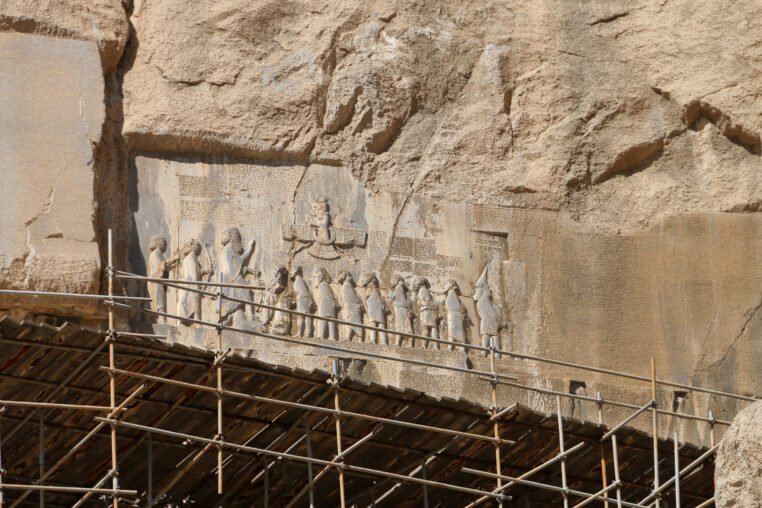
| C-00 | Ahura-Mazda-versus-Lie ideology was public during Persian rule | Behistun DB 4.36–92: the Lie causes rebellion; rulers must resist Lie-followers; Darius invokes Ahura Mazda and circulates the record | Royal propaganda does not prove Darius’s personal moral perfection | Established imperial-ideology fact |
| C-01 | Persian ideas circulated through Imperial Aramaic | Bīsotūn translation at Elephantine, about 420 BCE | Capacity and availability do not prove doctrinal transfer | Established |
| C-01A | Jewish–Magian social proximity is directly documented | 434 BCE Elephantine legal document naming Mithrasarah Magus as witness in a Jewish colonist’s transaction | Contact does not prove religious instruction | Established contact fact |
| C-01B | Achaemenid Aramaic distinguished Ahura Mazda from YHW/Yaho | Aramaic Bīsotūn uses ʾwhrmzd; Jewish Elephantine documents name the temple deity YHW/Yaho |
Establishes historical/cultic distinction, not metaphysical nonidentity or Mazda–Father identity | Established |
| C-01C | Iranian vocabulary entered Greek and Jewish/Christian religious usage | Old Iranian paridai̯za- → Greek paradeisos → Septuagint Eden and later “paradise” | A lexical loan does not prove wholesale doctrinal borrowing | Established lexical receipt |
| C-02 | Iranian demonological material entered Jewish tradition | Aēšma → Asmodeus in Tobit | Name/function are related but not identical in every respect | Established |
| A-01 | 2 Samuel 24 and 1 Chronicles 21 redistribute incitement | Direct source comparison | Satan may not yet be a proper name | Established textual relation |
| A-02 | Exodus 4 and Jubilees 48 redistribute Moses’s attacker | Direct source/rewrite comparison | Mastema remains subordinate | Established textual relation |
| A-03 | Jewish supernatural evil becomes an organized history and camp | Watchers, Jubilees, Qumran | Development is branching, not a single straight line | Established |
| T-01 | Yasna 30 coordinates two spirits, Truth/Lie, choice, life/death, and final defeat | Old Avestan text and translation | Aša/Druj vocabulary has Indo-Iranian cognates | Established |
| T-02 | 1QS coordinates two spirits, Truth/Deceit, lots, Light/Darkness, bounded evil, and final destruction | 1QS 3:13–4:26 | Jewish two-ways and biblical-light materials are real inputs | Established textual structure |
| T-03 | Iranian participation best explains the assembled 1QS package | Structural comparison; Collins; de Jong; Iranica | Not a translation; Zurvanite reconstructions remain debated | Probable |
| F-01 | Ahura Mazda is called Aša’s Father at Yasna 44.3 and 47.2 and creator at 31.8 | Gathic passages as controlled by Boyce’s Iranica entry | “Father” is a theological relation, not biological generation; exact English renderings still require edition control | Established textual relation |
| F-02 | Aša denotes truth, justice, righteousness, and right order, opposed by Druj/falsehood | Gathas; Boyce’s Iranica synthesis | Aša has Indo-Iranian antecedents and is not lexically identical to Greek alētheia | Established semantic and structural relation |
| F-03 | Gathic and Johannine Father-language are comparable theological metaphors | Father/creator of Aša; Johannine divine Fatherhood | Neither relation is biological; metaphorical equivalence does not prove transmission | Established category-level comparability |
| J-01 | The Gospels demonstrably receive Daniel | Mark 13; Matthew 24; Luke 21; John 5 | Reception is not upstream dependence | Established |
| J-02 | Matthew attaches Father-language to Danielic judgment | Matthew 13:41–43; 16:27 | Matthean redaction is not necessarily verbatim Jesus | Established Gospel-level fact |
| J-03 | John 5 joins Daniel 7 authority and Daniel 12 resurrection | John 5:19–29; Johannine Son-of-Man scholarship | Johannine synthesis, not mechanical quotation | Established to probable |
| P-01 | John’s Father is the primary divine source | John 1, 3, 5, 10, 14–17 | Son shares divine functions and designation | Established |
| P-02 | John’s immediate construction is Jewish–Hellenistic | Genesis, Isaiah, Wisdom, Daniel, agency and Logos traditions | Does not settle deeper conceptual genealogy | Established |
| P-03 | John 8 operationalizes paternity through moral reproduction | John 8:31–47 | Passage has dangerous anti-Jewish reception requiring control | Established |
| P-04 | John 8:54 locates the Father in Israel’s God-language and reports the interlocutors’ claim | Greek text and narrative context | Verse 55 denies that communal naming equals knowledge; the passage does not certify every inherited Yahweh description | Established |
| P-05 | John’s Father is the only true God and source of word, Spirit, and Son of Truth | John 3:33–35; 14:6; 15:26; 17:3, 17 | Distinctively Johannine synthesis; does not name Mazda | Established textual relation |
| P-06 | The Gathic and Johannine systems share a Father/source-of-Truth versus Lie geometry | F-01, F-02, P-03, P-05 | Functional correspondence is not lexical identity or direct dependence | Comparatively demonstrated |
| P-07 | John’s most explicit ultimate-identity formula is universal: the Father is “the only true God” | John 17:3, controlled by 17:17 and 15:26 | Does not erase Israelite narrative continuity or covenant | Established textual emphasis |
| P-08 | John 8:54 fixes the Father as antecedent and attributes “He is our God” to the interlocutors, while 8:55 denies their knowledge | Greek text; reported-speech construction; immediate sequence | Tone is not uniquely determined; same local referent remains in view | Established grammatical and narrative distinction |
| M-01 | Mazda has the stronger older continuity on the Johannine-derived moral axes | Matched core/canon/reception ledgers | Yahweh’s narrative and covenantal advantages retained; later developments compared symmetrically | Comparatively demonstrated within the audited genealogy |
| M-02 | John’s Father-concept has a partly Iranian-shaped genealogy | Cumulative chain C + R + A + T + J | No direct Avesta-to-John source | Probable cumulatively |
| M-03 | Ahura Mazda is Jesus’s Father | One-true-God monotheism, F-01/F-02, P-05/P-06, probable mediated genealogy, demonstrated comparative fit, and unique-role Mazda↔Father identification | John’s immediate literary locator is Israel’s God-language; Elephantine distinguishes Mazda from YHW cultically; no printed Persian name; ultimate identity is theological | Comparatively demonstrated within the audited genealogy; theologically demonstrated within the defended premises |
| M-04 | John secretly meant the proper name Mazda | No direct evidence | Would require explicit early intermediary or naming source | Unsupported |
| M-05 | Covenant fixes John’s Israelite narrative role but does not alone decide the universal Father/source-of-Truth role | John 8:54; 17:3, 17; 15:26; full-profile ledger | Distinguishes rather than suppresses covenant evidence | Strong interpretive distinction |
| X-01 | The cumulative Iranian-mediated model explains more of the evidence sequence than a sealed independent-development model | G-01/G-02, C-00–C-02, A-01–A-03, T-01–T-03, D-01–D-04, P-01–P-07 | Explanatory scope does not turn probability into direct textual naming; internal Jewish and Hellenistic causes remain active | Strongest cumulative historical explanation |
| X-02 | John 8:54 reports an inherited God-claim while 8:55 denies that the claimants know the Father | Greek narrative sequence of John 8:54–55 | Maintains the Israelite literary locator; does not itself name Mazda | Established textual distinction |
| X-03 | If one unique perfectly good Father/source of Truth is occupied by both the Johannine Father and Mazda, the names co-refer | John 14–17; Gathic Father/creator-of-Aša relation; full profile ledger; formal uniqueness inference | Validity is conditional on one-Father, necessary-goodness, and successful Mazda-role premises; historical method cannot measure transcendent identity | Logically demonstrated under stated premises |
Pro-Mazda evidence-vault intake
These exhibits are admitted as supporting evidence. They are not silently promoted into direct transmission proofs.
| ID | Claim | Principal evidence | Required control | Grade |
|---|---|---|---|---|
| PM-001 | John 4’s Father–Spirit–Truth cluster closely corresponds to the Mazda–Spenta Mainyu–Aša structure | John 4:23–24; Yasna 47.1 and the Spenta Mainyu Gatha | No lexical loan or direct Johannine dependence established; mainyu translation debated | Strong comparative support |
| PM-002 | John 14:6 compresses Way, Truth, and Life into the route to the Father, corresponding to Gathic choice/path, Aša, and Life/Best Existence | John 14:6–19; Yasna 30 and related Gathic passages | “Path” varies by translation; no claim of explicit Gathic bodily resurrection | Meaningful structural support |
| PM-003 | The Mazda-centered Iranian system possesses an ancient covenant institution through Mithra | Indo-Iranian mitrá; Mihr Yašt 10.1–6; Achaemenid invocations under Artaxerxes II | Distinguish system-level covenant capacity from Mazda personally performing every Mithraic function | Strong objection repair at system level; developing at direct identity level |
| PM-004 | The Mazda tradition contains an ancient sacred-Word category and a later personified Holy Word with healing and evil-defeating agency | Gathic mąθra; Yasna 28.5, 45.5; Vīdēvdād 19 and 22; Manthra Spenta traditions | Immediate Johannine Logos sources remain Jewish–Hellenistic; no Avestan incarnation; layer early Word from later personification | Strong comparative support; developing genealogy |
| PM-005 | Sraosha closely corresponds to John’s Spirit-of-Truth function through hearing, obedience, derived speech, teaching, and Aša alignment | John 16:13–15; John 8:47; Gathic Sraosha; Yasna 57; Iranica “Sraoša” | Do not identify Sraosha with the Paraclete or collapse him into Spenta Mainyu | Strong functional correspondence |
| PM-006 | Mazda-centered judgment and Johannine judgment both reveal the moral self through deeds aligned with Truth or Lie | John 3:19–21; John 5:28–29; Hādōxt Nask 2; Daēnā/Dēn traditions | Date the received Hādōxt narrative cautiously; no direct maiden/bridge borrowing claim | Strong comparative support; developing genealogy |
| PM-007 | John 17 directly calls Jesus’s God “Holy Father” and “Righteous Father” in the prayer that also names him the only true God and makes his word Truth; Mazda is spənta and Father/creator of Aša | John 17:3, 11, 17, 25; Yasna 44.3, 47.2; Iranica on Ahura Mazda, Aša, and Aməša Spənta | Israelite holiness and righteousness remain immediate sources; hagios/dikaios are not Avestan loans | Tight comparative identity support |
| PM-008 | John’s “Father’s name” language distinguishes inherited labeling from revealed knowledge of divine being, character, word, Truth, and love | John 5:37–38; 8:19, 54–55; 16:3; 17:6–26; van der Merwe’s exegetical study | Preserve John 8:54’s real Israelite locator and Jewish divine-name theology; no hidden Mazda spelling | Strong internal textual control; supports comparative method |
| PM-009 | Ancient writers could preserve Mazda’s proper name, render him as Zeus or Bēl, or coordinate Zeus with Oromasdes | Achaemenid/Greek/Aramaic evidence synthesized in Iranica, “Ahura Mazdā” | Interpretatio graeca varies by context; naming permeability is not proof of Johannine Mazda awareness | Strong co-reference control; indirect identity support |
| PM-010 | Achaemenid inscriptions make Ahura Mazda the source of kingship, favor, victory, and legitimate rule; wider Iranian xᵛarənah marks divinely connected glory and royal charisma; John makes the Father the source who glorifies and authorizes the Son | Behistun; DNa; DSz; Iranica “Farr(ah)”; John 1:14; 7:18; 8:50, 54; 12:23–43; 17:1–24 | Never claim xᵛarənah occurs in Darius’s inscriptions; preserve kābôd/doxa, Isaiah, and Daniel as immediate Johannine sources | Meaningful functional comparison; developing identity support; direct genealogy unproved |
| PM-011 | Gathic Chinvat supplies a decisive passage associated with differentiated moral destiny, while John 14 identifies Jesus as the exclusive Way, Truth, and Life through whom one comes to the Father | Yasna 46.10–11; 51.13; Iranica “Činwad Puhl”; John 14:1–17 | Keep later narrow/wide bridge mechanics out of the Gathic layer; distinguish a judgment boundary from Jesus as personal mediator | Strong chronological and structural support; developing identity support; direct genealogy unproved |
| PM-012 | Anāhitā and John both connect divine water with life and purification | Ābān Yašt; John 4:10–14; 7:37–39 | John explicitly interprets the water as Spirit; Jeremiah 2:13, Ezekiel 47, and Zechariah 14:8 are closer sources; Anāhitā is distinct from Mazda | Research lead only; rejected as a standalone Father-identity exhibit |
| PM-013 | Wisdom 1–2 supplies a Jewish intermediary joining holy Spirit versus deceit, lying and death, immortal righteousness, God as non-author of death, a righteous child who calls God Father, hostile works, and adversarial affiliation | Wisdom 1:1–16; 2:12–24; John 5:19–29; 8:31–59; Winston’s Iranian-component review | Date Wisdom broadly; report the diabolos identification dispute; preserve Jewish scripture and Greek philosophy as immediate sources | Strong transmission bridge and Johannine-background control; direct Iranian dependence unproved |
| PM-014 | Wisdom 2’s righteous child knows God, calls God Father, exposes hostile works, and is condemned to a shameful death; John repeatedly joins Jesus’s Father/Son claim to hostile works and attempted murder | Wisdom 2:12–20; John 5:16–18; 7:7, 19; 8:37–55; 10:31–39; Matthew 27:43 reception | Do not turn a righteous-sufferer pattern into a unique prediction; Christian reception does not prove John directly quoted Wisdom | Strong literary-profile correspondence; direct Johannine dependence developing |
| PM-015 | Wisdom 18 personifies God’s all-powerful Word descending from the heavenly throne, supplying a Jewish intermediary between Manthra Spenta and John’s Logos | Gathic mąθra; later Manthra Spenta; Wisdom 18:13–16; John 1:1–18 | Wisdom’s Word executes judgment and is not explicitly the Son; layer early mąθra from later personification; preserve Jewish/Hellenistic sources | Strong comparative intermediary; Iranian genealogy plausible but unproved |
| PM-016 | Plutarch reports that Oromazes created Truth and associates him with light against Areimanius as darkness and ignorance | Plutarch, Isis and Osiris 46–47; Boyce, “Aməša Spənta” | Received Greek testimony, not a verbatim Gathic source or documented Johannine intermediary | Strong identity-profile reception; direct genealogy developing |
| PM-017 | Matthew’s honorable Magi from the East recognize Jesus through a celestial sign, bow, give treasures, heed a true dream, reject Herod’s deception, and protect the child | Matthew 2:1–12; Iranian origin and classical Persian-priest meaning of magos; de Jong’s Greek-reception analysis | Matthew names neither Persia nor Mazda; magos also meant magician; star practice may conflate Magi and Chaldaeans; historicity disputed | Established Matthean fact; strong Persian-Magian reception witness; explicit Mazda confession plausible but unproved |
| PM-018 | Rašnu supplies a distinct judge within the Mazda-centered order, structurally comparable to John 5’s delegation of judgment from Father to Son | Rašn Yašt; John 5:22–29 | Rašnu is not Gathic; delegated judgment is widespread; Daniel 7 and Jewish agency are closer to John | Developing structural support |
| PM-019 | Haurvatāt–Amərətāt form an ancient Wholeness–Immortality pair comparable to John’s abundant and eternal life | Gathic pair; John 3:16; 5:24; 10:10 | Early ritual meanings complicate a simple present-life/afterlife split; pairing may arise independently | Meaningful supporting pattern with translation controls |
| PM-020 | Vərəθraγna’s victory resembles Jesus overcoming the world | Bahrām/Verethragna tradition; John 16:33 | Victory language is universal and no tighter historical-textual package is established | Lead only; rejected as proof |
| PM-021 | Ātar is called Mazda’s son, gives the straightest way to non-liars, is associated with Truth, and serves judgment; John makes the Son Light, Way, Truth, and Judge | Younger Avestan Yasna; Mihr Yašt 10.3; Iranian fire-ordeal/judgment tradition; John 3, 5, 8, 12, 14 | Layer the Gathic and Younger Avestan evidence; Jewish sources remain immediate; no Jesus=Ātar or direct-copy claim | Strong multi-feature structural support; genealogy developing |
| PM-022 | Haoma’s consumed, health-giving and death-averting sacred life corresponds to John 6’s consumed heavenly life and resurrection promise | Yasna 9–11; later White Haoma; John 6 | Later immortality material cannot be backdated; manna, Wisdom, and Christian meal tradition are immediate | Developing research lead |
| PM-023 | The Mazda-centered divine heptad corresponds broadly to Revelation’s seven Spirits before the throne and sent through the earth | Aməša Spənta tradition; Revelation 1:4; 3:1; 4:5; 5:6 | Zechariah 4 is immediate; seven is widespread; Revelation/Fourth Gospel authorship distinct or disputed | Developing apocalyptic-structure lead |
| PM-024 | Hostile and deceptive functions operate inside Yahweh’s court/authority, then parallel rewritings assign earlier Yahweh-actions to Satan or Mastema; John assigns murder and the Lie to devil-side paternity | 1 Kings 22; Job 1–2; Zechariah 3; 2 Samuel 24/1 Chronicles 21; Exodus 4/Jubilees 48; John 8 | Ha-satan develops from title to figure; secondary causation and judicial judgment remain alternatives; no explicit Johannine citation or Yahweh=devil sentence | Established textual facts; strong developmental pattern; Johannine completion probable as environment, conscious dependence unproved |
| PM-025 | John 8’s Father dispute begins at 8:19 and progresses through above/below origin, two paternal sources, rejected Abraham/God claims, devil paternity, and the 8:54–55 designation/knowledge distinction | John 8:19–55 | Verse 54 remains an Israelite narrative locator; the separation reading is not an explicit Mazda proper name | Established textual sequence; separation reading defensible; conscious Mazda naming unproved |
| PM-026 | Adversarial functions externalize unevenly: accusation and some incitement/attack move outward more clearly than deception or destruction | Numbers 22; Job 1–2; Zechariah 3; 1 Kings 22; Samuel/Chronicles; Exodus/Jubilees; John 12; 2 Thessalonians 2; Revelation | Divine hardening, delusion, and destruction persist; functions must not be collapsed | A methodological taxonomy; A− selective canonical pattern; complete migration rejected |
| PM-027 | Ezekiel’s Yahweh claims deception/enticement and non-good statutes and commands killing without pity, alongside a real mercy/restoration counter-profile | Ezekiel 5; 9; 14:9; 18; 20:25–26; 23–24; 33; 36–37 | Judicial/visionary context, disputed firstborn-law interpretation, metaphor, and restoration texts retained | Established textual exhibits; B+ cumulative hostile-profile relevance; insufficient alone but incorporated into PM-028’s cumulative identity verdict |
| PM-028 | Yahwistic texts attribute destruction without cause, hardening toward extermination, harmful-spirit agency preceding attempted murder, confusion, a lethal stumbling block, and calamity to Yahweh; John 8’s works-and-character paternity rule identifies this cumulative profile with the Devil/Father of the Lie | Job 2:3; 42:11; Joshua 11:19–20; Deuteronomy 2:24–35; Exodus 4:21–23; 1 Samuel 18:10–11; 19:9–10; Isaiah 19:14; Ezekiel 3:20; Jeremiah 20:7; Isaiah 45:7; Amos 3:6; Lamentations 3:37–38; John 8:19–55 | Translation and source-critical controls retained; hardening and judgment have theological defenses; counter-profile texts remain visible; Genesis 2–3 withdrawn from active use; no single exhibit bears the identity inference | Established textual exhibits; A− cumulative hostile-profile pattern; Yahweh–Devil identity is the archive’s affirmative theological verdict under its cumulative method |
| PM-029 | The Yahwistic corpus directly attributes killing, wounding, plague, hardening-to-destruction, firstborn death, collective punishment, extermination commands, cosmic destruction, and mass death through subordinate agents to Yahweh; the census pair transfers incitement from Yahweh to Satan while retaining Yahweh as sender of the 70,000-death plague | Genesis 6–7; 18–19; Exodus 4–14; 32; Leviticus 10; Numbers 11; 16; 21; 25; Deuteronomy 7; 20; 32; Joshua 6; 10–11; 1 Samuel 2; 15; 2 Samuel 24; 1 Kings 13; 2 Kings 19; 1 Chronicles 21; Job 1–2; 42; Amos 3–4; Hosea 13; Zephaniah 1; Isaiah 45; Lamentations 3; John 8 | Narrative, poetry, threats, commands, and subordinate agency separated; judicial and warfare rationales retained; 1 Kings 13 is human deception plus divine punishment; Numbers 25 is contextual agency; Genesis 2–3 withdrawn | Established direct textual pattern; A complete destructive-sovereignty profile; A− John 8 murderer-side relevance; principal support for the archive’s affirmative Yahweh–Devil verdict |
| PM-030 | Yahwistic texts assign individual deaths and lethal strikes to Yahweh, portray Yahweh as warrior and enemy, and preserve Job’s “without cause” accusation alongside the book’s direct Yahweh-agency statements | Genesis 38:7–10; 2 Samuel 6:6–8; 1 Samuel 6:19–21; 25:36–38; 1 Chronicles 10:13–14; Exodus 15:1–3; Isaiah 63:7–14; Lamentations 2:1–8; Job 9:14–18; 2:3; 42:11; John 8 | Beth-shemesh number controlled; Abimelech is a conditional warning; bears are not explicitly sent and deaths unstated; Acts 5 mechanism unstated; narrated rationales and genres retained | Established explicit textual pattern; A− cumulative hostile-profile relevance; principal supporting evidence for the archive’s affirmative Yahweh–Devil verdict |
| PM-031 | Yahwistic texts attribute infant death, intended non-hearing before death, hostile heart-turning, manipulated counsel for ruin, commissioned lethal agents, offspring/parent-child destruction threats, commanded stoning, and explicit New Testament angelic killing to Yahweh’s authority | 2 Samuel 12:13–18; 1 Samuel 2:22–25; Psalm 105:23–25; 2 Samuel 17:5–14; Jeremiah 4:9–10; 13:12–14; 15:1–9; 2 Kings 17:24–26; Acts 12:20–23; Hosea 9:11–17; Numbers 15:32–36; John 8 | Jeremiah 4 is accusation; 2 Kings 8 separates Elisha/Yahweh/Hazael; 2 Kings 1 is prophet-initiated fire; Numbers 14 lacks direct sending; 1 Corinthians 11 is paragraph-level agency; genres and judicial rationales retained | Established multi-corpus textual pattern; A− cumulative hostile-profile relevance; principal supporting evidence for the archive’s affirmative Yahweh–Devil verdict |
| PM-032 | Ancient Christians separated Jesus’s higher Father from the scriptural Creator, read canonical John through layered divine systems, rejected morally defective portrayals as false representations of God, and historically combined Christian revelation with Iranian cosmological vocabulary | Marcion and Apelles; Irenaeus 1.8.5 and 1.30; Heracleon through Origen; Apocryphon of John; Gospel of Judas; Pseudo-Clementine Homilies; Cologne Mani Codex and Iranian Manichaean texts; Questions of John; Book of the Two Principles; John 1; 4; 5; 8; 12; 14; 16 | Most witnesses postdate John; several survive through opponents; systems remain distinct; Manichaeism is not orthodox Zoroastrianism; reception does not prove origin; no source explicitly names Mazda as John’s Father | A ancient separation precedent; A− early Johannine layered reception; A historical Iranian–Christian synthesis; B cumulative relevance; D standalone Mazda identification |
| PM-033 | The Apocryphon of John places Arimanios in both recension streams, contrasts a luminous truthful Father with an ignorant creator and counterfeit spirit, and cites a Book of Zoroaster in the long recension | Apocryphon of John recension evidence; Plutarch 46–47; Tripaldi; Helmbold; Litwa | Separate common-recension opening from long-recension expansion; probable Ahrimanic allusion is not explicit authorial commentary; cited book is not recovered; anti-Pharisee polemic is not an ethnic judgment; no explicit Mazda name | A textual markers; A− Ahrimanic allusion; B+ Iranian-coded reception; B profile correspondence; C direct genealogy; D Gathic transmission/standalone Mazda identification |
| PM-034 | Mazda creates and acts through Spenta Mainyu; John 10:30 preserves Father–Son distinction within a statement of oneness | John 10:27–30; Iranica, “Ahura Mazdā” and “Aməša Spənta” | Father/Son is not Mazda/Spirit; no direct dependence or Nicene doctrine is claimed; John’s Jewish discourse remains immediate | A− Johannine grammar; B Iranian structure; B− comparison; C identity support; D genealogy |
| PM-035 | Vohu Manah shares Mazda’s dwelling with truthful souls and welcomes them in the afterlife; John 14 promises reception in the Father’s house through Way, Truth, and Life | Yasna 32.15; 49.10; Vendidad 19 through Narten; John 14:1–6 | Gathic and Younger Avestan layers separated; Vohu Manah is not Jesus; fravashi is not the Paraclete | A− Iranian footing; C+ correspondence; C identity support; D genealogy |
| PM-036 | Jesus’s central mission and disciple ethic foreground Truth, enemy-love, mercy, healing, child protection, life, and nonretaliation, while Yahwistic texts retain authorized deception, merciless extermination, child death, destructive hardening, and collective punishment | Matthew 5–7; Luke 6; 9; Mark 9–10; John 8; 10; 14–17; Deuteronomy 7; 20; 1 Samuel 15; 1 Kings 22; 2 Kings 1; Ezekiel 14; 20; existing Intakes 017–021 | Preserve merciful Yahweh traditions, Jesus’s judgment sayings, genre, agency, divine-prerogative and incarnation defenses; not every row is a formal contradiction | A textual poles; A− Jesus profile; B+ cumulative divergence; B John 8 relevance; C standalone identity; D Mazda naming |
| PM-037 | Jesus’s nonknowledge, growth, prayer, sending, received teaching, obedience, and submission establish real distinction from the Father while John also attributes divine works and high status to the Son | Mark 13:32; Luke 2:52; Mark 14:36; John 1; 5; 6–8; 10; 12; 14; 20 | Two-natures and Trinity models can accommodate distinction and limitation; this does not identify the Father or defeat every shared-divine-identity claim | A personal/mission distinction; A− human limitation; B anti-collapse control; C crude equation relevance; D Mazda identity |
| PM-038 | A Yahweh-commanded Sabbath execution is matched with Jesus’s Sabbath question about doing good/harm and saving life/killing, followed by healing; Luke adds release from Satanic bondage | Numbers 15:30–36; Exodus 31:12–17; Mark 2:23–3:6; Luke 13:10–17 | Numbers concerns high-handed covenant defiance; Mark targets current interpreters and does not quote or repudiate Numbers; Sabbath also protects workers and signifies liberation | A matched textual sequence; B+ profile reversal; C identity relevance; D Mazda naming |
| PM-039 | Luke attributes disabling bondage to Satan and release to Jesus while Yahwistic texts directly assign plague, disease, or lethal affliction to Yahweh | Luke 13:10–17; Acts 10:38; Exodus 7–12; Deuteronomy 28; 2 Samuel 12; 24 | Acts is Peter’s speech; not every sickness is demonic; Yahweh is also healer; judicial settings differ | A direct exhibits; B cumulative agency tension; C identity relevance; D Mazda naming |
| PM-040 | Jesus’s good-Father analogy excludes snake/scorpion as a harmful substitute for requested food; Numbers joins food rejection and Yahweh-sent venomous serpents | Matthew 7:7–11; Luke 11:9–13; Numbers 21:4–9; John 3:14–17 | Numbers is judgment after rejected provision, not an identical request; Yahweh supplies the remedy; John 3 positively reuses it | A textual poles; B rhetorical tension; C identity relevance; D Gospel dependence or Mazda naming |
| PM-041 | Samaritan and Gentile mercy, faith, and mission scenes reverse the operative no-mercy boundary while extending inclusive Israelite traditions | Luke 4:16–30; 9:51–56; 10:25–37; John 4:1–42; Matthew 8:5–13; 28:18–20; Deuteronomy 7; 20; 1 Samuel 15 | Luke 9 expansions are variant; ḥerem is limited and judicial; Rahab, Ruth, Naaman, Jonah, Isaiah, and alien-love are internal precedents; Israel priority remains | A textual profile; B+ expansion/reversal; C identity relevance; D Mazda naming |
| PM-042 | John’s Father is unseen and uniquely revealed by the Son, while Hebrew Bible figures are said to see Yahweh or the God of Israel; John assigns Isaiah’s seen glory to Jesus | John 1:18; 5:37; 6:46; 12:37–41; Exodus 24:9–11; 33:18–23; Numbers 12:6–8; Isaiah 6:1–10 | Theophanies can be accommodated manifestations; John 12 supports preincarnate-Son mediation and Yahweh–Christ continuity; “seen figure = Devil” is absent | A textual poles; B+ Father–theophany distinction; B continuity countermodel; C identity relevance; D Mazda naming |
| PM-043 | Jesus grounds divine paternity in sun, rain, and kindness crossing enemy boundaries, while Yahweh texts selectively withhold rain and send drought or famine | Matthew 5:43–48; Luke 6:27–36; Deuteronomy 11:13–17; 28:22–24; 1 Kings 17–18; Amos 4:6–9 | Common providence and exceptional judgment differ; Yahweh also provides universally and Torah protects enemies; Jesus retains judgment | A matched image; B+ profile tension; B John 8 relevance; C standalone identity; D Mazda naming |
| PM-044 | John moves worship of the Father beyond Gerizim and Jerusalem into Spirit and Truth, while Deuteronomy centralizes Yahweh’s sacrificial worship at the chosen place | John 1:14–18; 2:13–22; 4:19–26; 7:37–39; Deuteronomy 12; 1 Kings 8 | Jewish priority and positive temple/festival imagery remain; fulfillment and relocation are stronger than repudiation; no direct Avestan quotation | A textual transition; B+ cultic development; B reinforcement of PM-001; C identity relevance; D hidden naming |
| PM-045 | Torah authorizes oaths in Yahweh’s name, while Jesus says not to swear at all and requires yes/no speech without sacred escalation | Matthew 5:33–37; 23:16–22; Deuteronomy 6:13; 10:20; Leviticus 19:12; Numbers 30:2 | Target may be false and evasive oath systems; New Testament oath-like assurances remain; tou ponērou may mean evil rather than evil one | A textual contrast; B+ truth transformation; B John 8 relevance; C identity; D Mazda naming |
| PM-046 | Jesus restores persons marked by skin disease, bleeding, corpse contact, and unclean spirits while locating moral defilement in the heart | Leviticus 11; 13–15; Numbers 19; Mark 1:40–45; 5:21–43; 7:1–23; Acts 10 | Ritual impurity is not guilt; Mark 7:19 is disputed; Jesus uses priestly verification; Acts 10 shows continued dietary scruple | A narrative pattern; B+ purity re-centering; C+ dietary repeal; C/D identity relevance |
| PM-047 | Jesus attributes Moses’s divorce allowance to hard hearts and gives creation’s one-flesh intention priority | Deuteronomy 24:1–4; Genesis 1–2; Mark 10:1–12; Matthew 19:1–12 | Deuteronomy regulates rather than commands divorce; Jesus appeals to Torah and God as joiner; no separate-gods claim | A explicit relativization; B+ accommodation principle; B methodological relevance; D Mazda naming |
| PM-048 | Jesus refuses to rank calamity victims as worse sinners, rejects personal and parental guilt as the offered explanation of congenital blindness, and responds through restorative work | Luke 13:1–5; John 9:1–41; John 5:14 | Repentance and judgment remain; John 9 may retain divine purpose; Jesus does not deny every sin/consequence relation | A explicit denials; B+ restorative-profile evidence; C identity relevance; D Mazda naming |
| PM-049 | Yahweh-attributed punishments fall on persons other than the principal offender, while Torah and prophets explicitly develop individual responsibility | Exodus 11–12; 20:5; Numbers 14; Deuteronomy 24:16; 2 Samuel 12; 24; Ezekiel 18; Jeremiah 31 | Transferred guilt differs from consequence and punishment; corporate-personhood and divine-prerogative defenses retained; correction is internal to scripture | A canonical poles; A− development; B+ moral-profile tension; C identity relevance; D Mazda naming |
| PM-050 | Jesus makes prayer for persecutors filial, while Jeremiah records Yahweh repeatedly forbidding intercession before corporate disaster | Matthew 5:43–48; Luke 6:27–36; Jeremiah 7:16; 11:14; 14:11–12; 15:1–9; John 17:9 | Hebrew Bible includes successful intercession; New Testament includes prayer limits; Luke 23:34 has an early textual variant | A textual poles; B+ mercy-ceiling tension; C identity relevance; D Mazda naming |
| PM-051 | The archive’s “probable,” “not established,” and “not measurable” qualifiers grade historical transmission, conscious naming, and methodological jurisdiction—not the demonstrated comparative and theological identity propositions | Case Charter; Runs 6–15; PM-001 through PM-050; proof-jurisdiction audit | The historical route remains probable; comparative scope and theological premises remain attackable; no explicit-name or direct-observation claim is added | A documentary separation; comparative Mazda verdict demonstrated; Father–Mazda identity theologically demonstrated within the framework |
| PM-052 | Jesus makes service, slave-status, foot washing, and voluntary life-laying the form of greatness and good-shepherd authority, while Yahweh is explicitly warrior and repeatedly manifests sovereignty through destructive victory | Mark 10:35–45; Luke 22:24–27; John 10:1–18; 13:1–17; Exodus 15; Deuteronomy 32; Isaiah 42 | Jesus retains authority and eschatological judgment; warrior action may liberate; mission ethics and divine judgment are not identical categories | A Jesus profile; A warrior profile; B+ authority-method tension; C identity; D Mazda naming |
| PM-053 | Yahweh’s self-shepherding promise in Ezekiel 34 supplies strong restorative continuity with John 10 and blocks an absolute Jesus/Yahweh shepherd split | Ezekiel 34; Isaiah 40:9–11; Psalm 23; John 10; Revelation 19 | Ezekiel retains judgment and a verse 16 textual issue; John adds repeated voluntary death; Revelation gives Christ warrior judgment | A continuity evidence; B+ Johannine continuity model; A anti-overstatement control |
| PM-054 | John 8:42 counterfactually denies the opponents’ claimed divine paternity; verse 44 identifies the devil as their operative father, while verses 54–55 preserve the reported Israelite designation and deny genuine knowledge | John 8:41–55 Greek; A. T. Robertson, Word Pictures, on John 8:42 | The passage does not literally state “Yahweh is the devil” or name Mazda; designation, knowledge, paternity, and ultimate identity remain distinct questions | A grammatical form; A− discourse implication; A sustained sequence; B+ Yahweh–Father separation relevance; D Mazda naming |
| PM-055 | The final twelve-door audit closes the global objections by separating proof jurisdictions, enforcing symmetric selection and matched strata, retaining continuity evidence, and verifying a sample of load-bearing claims | Entire archive; Intake 043; Objection Closure Ledger; Audit Report | Closure is proposition-specific; new textual or source errors reopen the affected claim; historical probability and theological premise-dependence remain explicit | A documentary closure; A− verification sample; historical route probable; comparative and theological verdicts demonstrated in their stated jurisdictions |
| PM-056 | The Gathic Father-of-Aša relation is replicated: Yasna 44.3 asks the primordial Father question, Yasna 47.2 identifies Mazda as Aša’s Father, and Yasna 31.8 supplies creator/establisher language | Yasna 31.8; 44.3; 47.2; Mary Boyce, “Ahura Mazdā” and “Ardwahišt” | Aša spans Truth, Order, Right, justice, and righteousness; textual replication does not prove Johannine dependence | A− textual-scholarly result; A relative chronology; A− comparative identity relevance; D direct dependence |
| PM-057 | First John 3:8–12 explicitly reveals God/devil paternity through righteousness, love, and Cain’s murder, corroborating John 8’s works-based paternity rule | John 8:31–47; 1 John 1:5; 2:21; 3:8–12; 4:7–16; 5:19–20 | Same authorship is disputed; neither document names Mazda or literally equates Yahweh with the devil; no ethnic generalization | A textual fact; A− Johannine-corpus result; C standalone identity; D Mazda naming |
| PM-058 | Titus, Hebrews, and James predicate divine nonfalsehood and non-temptation, while James contrasts desire–sin–death with the Father–gift–truth sequence | Titus 1:2; Hebrews 6:18; James 1:13–18; Yahweh deception and truth controls | Promise/oath context, test versus temptation, judicial setting, mediated agency, and Yahwistic truth texts must be weighed | A textual fact; A− necessary-character premise; B+ canonical/Yahweh-profile tension; C standalone identity; D Mazda naming |
| PM-059 | John 8:54’s hymeis legete hoti attributes “He is our God” to the interlocutors; stable reference and rhetorical importance do not by themselves entail that Jesus independently endorses every attached description or that the verse closes comparative identity | John 8:41–55 Greek; Donnellan, “Reference and Definite Descriptions”; Stanford Encyclopedia entries on reference, descriptions, attitude reports, and speech acts | John strongly locates the Father in Israel’s God-language; the verse contains no explicit negation of the designation; semantic versus pragmatic accounts of reference differ; no Mazda naming | A Greek attribution; A logical-semantic minimum; A− authorial context; B+ anti-knockout result; D Mazda naming |
| PM-060 | Mazda’s Gathic Father/creator relations encompass Aša, Vohu Manah, and Ārmaiti; creation proceeds through Spənta Mainyu, and Yašt 19 receives the beneficent powers as one in mind, voice, and act under one Father/ruler; John joins Father, Son, and Spirit through common word, work, Truth, life, and unity | Yasna 31.3, 31.8, 44.3–4, 44.7, 45.4, 47.2, 51.7; Yašt 19.16–18; John 5:19, 26; 8:28; 10:30; 12:49; 14:10; 16:13–15; Iranica “Aməša Spənta” and “Ahura Mazdā” | Different textual layers and ontologies; not a Persian Trinity; one-essence formulation is scholarly synthesis; Jewish agency and creation traditions remain immediate; no direct dependence | A− Iranian relations; A Johannine pattern; B+ comparative support; C standalone identity; D direct dependence |
| PM-061 | The Iranian system partitions Aša/Lie, beneficent/hostile choice, life/non-life, good creation/corrupting counter-creation, and final restoration; John partitions Father/Son life, truthful word, and restorative work from devil-side lie, murder, sin, and destruction | Yasna 30.3–8; Yasna 37.1; Vendidad 1; Yašt 19; John 5:19–29; 8:42–47; 10:10; 12:49; 14–16; 1 John 3:8–12; Iranica “Dualism,” “Ahriman,” “Cosmogony,” and “Frašō.kərəti” | Yasna 44.5 and Iranian creation variants retained; exact spirit genealogy disputed; John 10’s thief need not be Satan; generic dualism insufficient alone; no Mazda naming | A− Gathic core; A received development; A Johannine profile; B+ system correspondence; historical route probable cumulatively; D naming |
| PM-062 | A pre-registered same-rules tournament tests Mazda, composite Yahweh, the Johannine-reinterpreted God of Israel, Wisdom’s God, 1QS’s God, Philo’s God, and the Platonic Good/Demiurge against identical Johannine Father criteria | Intake 047; Rival-Candidate Scorecard; John 1, 5, 8, 14, 16–17; Gathic and received Iranian sources; Wisdom 1–2, 7, 9, 18; 1QS 3–4; Philo; Plato | Ordinal marks are non-additive; candidates are not all independent deities; literary reference, immediate environment, comparative profile, and theological identity remain separate | A documentary fairness; A− candidate evidence; A− older-profile result; B+/A− comparative identity; D direct dependence/naming |
| PM-063 | The strongest non-Iranian countermodel is a distributed synthesis: Hebrew scripture supplies narrative location, Wisdom the moral bridge, Qumran the dualistic environment, Philo the Logos analogy, Plato metaphysical grammar, and John creative Christology; Mazda remains the older named center of the integrated high-discrimination profile | Wisdom of Solomon; 1QS; Philo; Plato; Johannine corpus; Iranian genealogy | A distributed immediate-source model may explain John’s expression without direct Avestan use; it does not by itself answer the deeper priority and integrated-genealogy question | A− historical control; Iranian contribution probable cumulatively; Mazda comparative priority A− within audited genealogy; theological identity premise-governed |
| PM-064 | Every PM-001–PM-063 exhibit is classified by dependency status and one of twelve evidence families; repeated translations, shared passages, overlapping profiles, and audit syntheses are barred from counting as separate votes | Intake 048; Evidence Dependency Map; complete PM ledgers | Qualitative classification does not supply numerical correlations; source-distinct does not mean statistically independent | A documentary completeness; A− dependency classification; rejects a sixty-three-independent-proofs claim |
| PM-065 | After dependency collapse, nine source-distinct pillars survive eight whole-family removal tests; removing Father-of-Aša materially downgrades the identity verdict, while several satellite families can be removed without collapse | Intake 048; families F01–F12; removal tests A–H | No likelihood multiplication is licensed; pillars interact historically; direct copying and conscious naming remain unestablished | A− source-family diversity; A− robustness; Iranian participation probable cumulatively; Mazda specificity demonstrated within the audited genealogy |
| PM-066 | Old Avestan Yasna 37.1 directly worships the Wise Lord as the one who dāt̰ the cow and Aša, then waters, plants, lights, earth, and all good things |
Yasna 37.1; Humbach–Faiss 2010; Hintze 2014 | dā may be rendered create, arrange, set, or establish; no creation-ex-nihilo claim |
A wording and Mazda subject; A− Mazda-as-originator/establisher of Aša; D Johannine dependence |
| PM-067 | Explicit ptā plus genitive Aša and begetting language in Yasna 44.3, the declarative ptā ašahyā mazdā in 47.2, the 31.8 founder/establisher relation, 37.1 creation/ordering, and 58.4 early reception form a translation-resistant paternity complex |
Old and Middle Avestan loci; Humbach–Faiss; Hintze; Boyce; Translation and Grammar Ledger | One related Iranian tradition, not five independent probabilities; 44.3 remains interrogative; 47.3’s disputed tā is excluded; Aša is broader than English “truth” |
A kinship grammar; A− Mazda identification and five-locus replication; A− comparative relevance; D direct John dependence/naming |
Key source anchors
Ancient texts
- Yasna 30, Avestan text and translation
- Aša and Mazda as Father/creator, Encyclopaedia Iranica
- Yašt 19 overview and textual composition
- Diogenes Laertius 1.9, Magian renewed life and immortality
- Bīsotūn inscription and its Aramaic circulation
- Old Persian Behistun text: Ahura Mazda and the Lie
- Iranian origin and transmission of “paradise”
- Community Rule 1QS 3:13–4:26
- John 8:31–59, SBLGNT
- Matthew 2:1–12, the Magi from the East
Modern controls
- Mladen Popović et al., 4Q114 radiocarbon study
- Albert de Jong, “Iranian Connections in the Dead Sea Scrolls”
- Morton Smith, “Persian Elements in the Bible”
- Jes P. Asmussen, “Aēšma”
- Jon D. Levenson, Resurrection and the Restoration of Israel
- Richard Bauckham, “The Qumran Community and the Gospel of John”
Interpretation rule
No citation in this matrix is asked to establish more than its row states. Availability is not dependence; reception is not genealogy; textual similarity is not automatically transmission; and theological identity is not a historical quotation claim. Contact receipts prove permeability rather than identity. The identity-directed evidence is F-01/F-02 plus P-05/P-06; the other exhibits test whether a historical route between them is credible.